


Introduction
The global imperative to address climate change has driven the emergence of the circular bioeconomy as a key strategy for sustainable development. Lignocellulosic biorefineries, by maximizing resource efficiency and minimizing environmental impact, play a central role in this paradigm. Among biorefinery technologies, the IonoSolv process has gained attention for its ability to selectively decompose lignocellulosic biomass into its constituent components using ionic liquids (ILs). The process benefits from the unique properties of ILs, such as low volatility, thermal stability, and recyclability, making it a promising solution for the efficient extraction of high-quality lignin while aligning with circular economy principles.
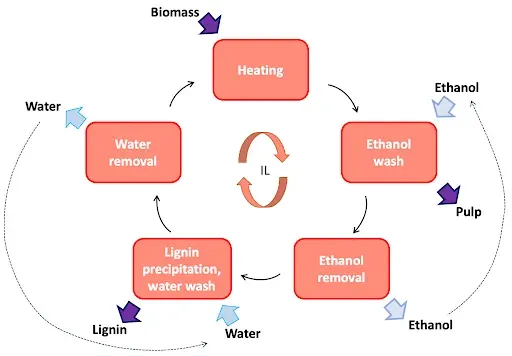
Fig. 1 (a) Bench-scale lignocellulose fractionation in the IonoSolv process using Ionic liquid
Point 1
The circular bioeconomy integrates sustainable development goals by emphasizing efficient resource use and waste minimization, with lignocellulosic biorefineries playing a pivotal role in this approach.
Point 2
The IonoSolv process, leveraging the unique properties of ionic liquids, demonstrates exceptional potential for lignin extraction through selective decomposition and enhanced recyclability, aligning with principles of environmental and economic sustainability.